

Once upon a time, land silently dictated everything that came after. The ability to trade, build, cultivate, and amass wealth frequently hinged on a boundary established decades prior. A remarkably comparable pattern is unfolding now, with the exception that the asset is invisible, infinitely reproducible, and continuously flowing via servers instead of soil.
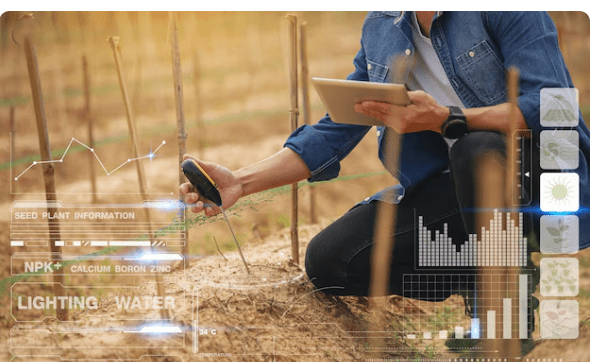
Slowly but surely, data has moved into the previously inhabited role land. These days, it supports economic might, influences competition, and subtly determines which businesses prosper and which falter. The more purposefully data is worked, the more valuable it becomes, in contrast to commodities that are burned or consumed.
| Key Context | Details |
|---|---|
| Core idea | Data functions as a foundational asset similar to land |
| Key difference | Data gains value through development, not extraction |
| Economic role | Fuels AI, automation, and decision systems |
| Strategic value | Control, context, and governance determine advantage |
| Infrastructure impact | Drives data centers, energy demand, and planning |
| Regulatory response | GDPR, CCPA, and evolving data governance |
Like raw terrain, raw data seldom makes an impression on its own. Typically, logs, clicks, sensor readings, and transaction data are disorganized, lacking context, and incomplete. Only after they have been cleaned, organized, and analyzed—a process that resembles cultivation rather than extraction—do they become valuable.
This distinction is important. Land is valuable when it is preserved and enhanced, while oil is valuable when it is extracted and used. The latter is far more the case with data, which takes time, money, and expertise to start yielding returns that go beyond a quarter.
The comparison is strengthened by another parallel. Location has a big impact on the value of land. Context is equally important to the value of data. Similar to how a fertile field is meaningless without access to labor, markets, or water, customer information is meaningless outside of systems that comprehend the consumer.
Organizations who realized this early started to consider data as long-term infrastructure during the previous ten years, instead of as a byproduct. They made investments in literacy, governance, and systems that made it safe and wise to reuse knowledge. Others inexpensively stored data in the hopes that it would eventually become valuable.
Now, that difference is evident. Businesses with well-developed data foundations use AI with remarkable assurance, simplifying processes and enhancing large-scale decision-making. Those who don’t frequently find that years of disregarded data are like worn-out farmland—technically owned, but excruciatingly unproductive.
The unique capacity of data to be utilized without running out is one reason the comparison strikes a chord. Personalized services, logistical planning, and fraud detection can all be supported concurrently by a single dataset. Although data is extremely adaptable due to its non-rival quality, competition is not eliminated.
Control is still important. Those who are able to evaluate information in a timely, responsible, and appropriate manner will have an edge over those who gather the most information. Context transforms possession into leverage, much as landowners next to a railroad.
Then come the physical repercussions. Even though data is digital, tangible infrastructure is necessary for its cultivation. Land, electricity, water, and public trust are all used by data centers, which changes national energy policies and municipal planning discussions in ways that seem noticeably more sophisticated but more expensive.
These facilities are embraced in some areas as long-term investment opportunities and economic pillars that promise jobs. Others experience resistance, which raises issues with resource allocation and environmental stress. Similar to land, data encourages conflicting claims over shared systems.
This complexity has led to the emergence of new professions. Similar to land managers and planners in the past, chief data officers, engineers, and analysts now hold similar positions. By weighing immediate advantages against long-term sustainability, they convert potential into production.
There will inevitably be ethical conflicts. Questions of ownership become more acute when data behaves like property. Who is in charge of gathering it, making money out of it, or limiting its use? Data rights, in contrast to property titles, are frequently hidden in contracts that few people properly read.
Regulation has reacted gradually but cautiously. Similar to zoning laws, frameworks like the CCPA and GDPR restrict detrimental applications while permitting development. They demonstrate an awareness that unbridled exploitation undermines trust, which eventually lowers value for all parties.
However, regulation cannot resolve issues on its own. While laws do not flow freely across borders, data does, leaving gaps that are both easily exploited and criticized. Despite the fact that innovation is happening at a far faster rate, this mismatch leaves organizations navigating uncertainty.
Another remnant of past land-based economies is inequality. Concentration is reinforced by large platforms’ ability to gather data at a scale that smaller businesses find difficult to match. Many businesses produce useful data but lack the resources to fully utilize it, which prevents them from reaching their full potential.
However, the non-rival nature of data provides promise. Collaborative platforms, open research projects, and shared datasets demonstrate that exclusivity is not always necessary for value. Data can support many users without losing value if it is managed carefully, much like shared land.
The silent variable is time. Patience is rewarded by land. Data also does. While organizations that invest in quality, documentation, and education create assets that are incredibly dependable over time, those that chase fast insights without stewardship frequently harm their future alternatives.
This strategy necessitates a shift in culture. Workers must comprehend data as something that is kept rather than something that is extracted. Mistakes, prejudice, and abuse erode trust rapidly, and once it is gone, it is difficult to regain.
The land analogy is becoming more and more powerful as AI systems develop. In the same way that cities develop from topography, models learn from data. While proper planning allows for scalability, robustness, and adaptation, poor foundations restrict what may be constructed.
The rivalry that is taking place is not about who gathers the most data, but rather about who controls it most effectively. Whether information becomes a long-term asset or a permanent problem is increasingly determined by control, context, and care.
This perspective makes the change seem more cyclical and less revolutionary. Fundamental resources have always been the center of power. It is not the logic that has changed, but the medium.
The roles that land formerly played—shaping influence, identifying opportunity, and rewarding individuals with long-term thinking—are now filled by data. Those who understand this are already discreetly constructing mechanisms that could establish economic boundaries for many years to come.
