

The promise of effortless living—lights that change according to your mood, security systems that email you updates, refrigerators that alert you when the milk is about to expire, and thermostats that learn your patterns with uncanny accuracy—was what first sparked the growth of smart homes. However, as these systems get more sophisticated, autonomous, and interconnected, an increasing number of homeowners are discreetly acknowledging something they never would have thought to say: their homes might have grown too intelligent for them to handle. It’s a problem that goes far beyond broken apps or unruly voice assistants; rather, it represents a more profound conflict between human comfort and technical aspirations.
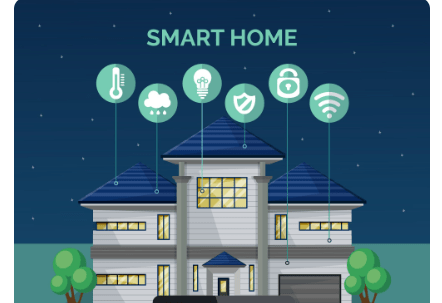
Numerous homeowners continue to advocate for the advantages that smart systems offer in day-to-day living. They describe waking up to a house that has warmed itself, lights that gradually get brighter at dawn, and appliances that are automatically set to use less electricity. Like having a quiet but incredibly attentive personal assistant who runs the household without requesting a day off, these conveniences seem like a contemporary luxury. For instance, many customers have seen a large reduction in their energy consumption thanks to smart thermostats. Once little more than keypad alarms, security systems today provide motion sensors, doorbell cameras, real-time warnings, and remote-locking capabilities that significantly increase people’s sense of security even when they are thousands of miles away.
Key Factors in the Debate Over Smart Homes
| Topic | Details |
|---|---|
| Core Question | Whether smart homes are becoming too complex for average homeowners |
| Key Advantages | Convenience, energy efficiency, security, accessibility, higher property value |
| Main Challenges | Complexity, privacy risks, security vulnerabilities, integration issues, cost |
| Industry Stakeholders | Homeowners, developers, tech firms, regulators |
| Developer Role | Integrating smart systems into new housing projects |
| Reference |
The benefits of smart homes for those with impairments or limited mobility go far beyond convenience. Automated adjustments and voice-activated controls can provide independence when manual chores would otherwise be impossible or very onerous. These technologies are frequently commended by caregivers for enabling loved ones to live longer and more comfortably alone. These intensely intimate tales serve as a reminder that smart technology is more than simply slick gadgets—for many families, it is a lifesaver.
However, it is getting more difficult to overlook the difficulties that complicate this environment. The complexity of smart home ecosystems increases as they grow. Compatibility problems between equipment that should theoretically function together are a common problem for homeowners. A thermostat may need a particular wiring arrangement that older homes may not have, and a smart lock from one brand might not sync with a hub from another. When software updates, account pairings, or connectivity issues arise in real life, the ease of use that is advertised on slick packaging frequently disappears. Some customers make jokes about how they require a part-time IT specialist only to prevent their lights from suddenly flickering.
An other source of discomfort is privacy worries. Every connected gadget is also a data collection tool, tracking routines, preferences, and behaviors that users hardly ever realize they are sharing. Homeowners are becoming more and more concerned about cameras at the door, microphones listening from across the room, and logs that indicate whether the house is occupied or not. Public scrutiny was only heightened by the scandal that broke out when it was discovered that numerous large tech companies were keeping and analyzing voice assistant recordings. The comfort factor is rapidly diminished by the possibility that your speaker is listening even when you are not speaking.
Vulnerabilities in security make that discomfort worse. IoT gadgets that are not properly secured can serve as digital gateways, making it surprisingly easy for hackers to gain access to home networks, as cybersecurity experts have warned time and time again. Understanding which gadgets are secure, which firmware needs to be updated, and which encryption standards should be enabled can be challenging for the typical homeowner. Every every gadget turns into an additional possible weak point. In rare but concerning cases, malevolent actors may turn the same security cameras inward.
Another factor influencing how consumers view the movement is the cost of adopting smart homes. Even while the cost of individual devices has decreased, a fully integrated system that manages appliances, lights, climate, entertainment, and security still requires a significant financial outlay. And after installation, the costs continue. Systems need to be serviced, devices break down, and some platforms switch to subscription-based business models that charge monthly payments to maintain operation. Owning a fancy car can feel a lot like the long-term upkeep of a smart home: the initial investment only prepares the ground for subsequent expenses.
Developers of real estate have started to notice this change very strongly. Developers must choose how far to go because buyers increasingly demand at least some degree of smart integration, such as keyless access or energy-efficient automation. Complete smart-home environments are promoted as a selling factor in countries such as the Middle East, China, and increasingly South Asia. Connectivity is used as a symbol of innovation and grandeur. Businesses in Pakistan, such as IMARAT, have noticed consumer interest and have been progressively focusing more on smart technologies. The tactic gives developers a clear advantage in a cutthroat market while also drawing in younger, urban consumers who value security and ease.
However, developers encounter the same difficulties as homeowners, albeit with greater difficulty. Coordination between contractors, electricians, IT teams, and manufacturers is necessary when integrating several systems from several vendors. In order to make sure that the infrastructure can accommodate improvements without requiring wall demolition, they must also consider how buyers might use these technologies in the future. Additionally, developers cannot afford to overlook the hazards involved in integrating internet-connected systems into every unit they construct, given the growing worry over cybersecurity. An entire development’s reputation could be at risk from a single breach.
More questions are raised by the wider societal effects of increasingly smart homes. Is it becoming harder for people to do simple domestic chores without technology? What happens if a person becomes so reliant on automation that they find it difficult to function during a blackout? According to some psychologists, an excessive dependence on automated systems may eventually weaken one’s natural ability to solve problems. However, sociologists contend that smart houses represent a move toward hyper-individualized living, in which every setting is tailored to the tastes of a single individual, possibly diminishing the shared domestic experiences that formerly united families.
Nevertheless, there is no indication that the trend toward smart homes will slow down in spite of these worries. Technology firms compete to create systems that are easier to use and need less human input. Because consumers are demanding smart features more and more, developers keep incorporating them. Governments investigate legislative frameworks to safeguard device security and privacy. Even the doubters acknowledge that the long-term trend is moving forward rather than backward.
