

Beneath the streets of Helsinki is a swimming pool. Like any other municipal institution, it is calmly commonplace and neither mysterious nor hidden. This pool is a part of a sophisticated underground system that also includes commercial malls, military bunkers, and hockey rinks. Not only is the engineering intriguing, but so is how well it integrates into daily living.
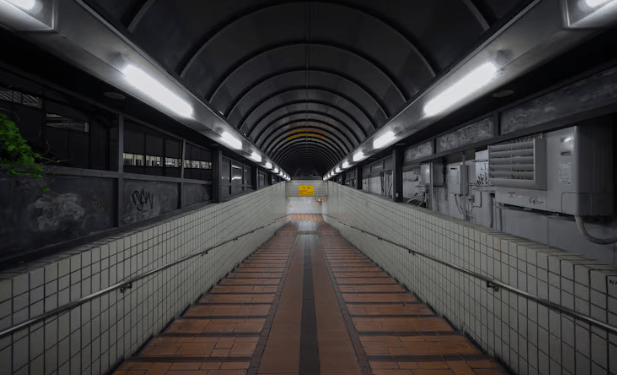
Many city planners now believe that the ground beneath our feet is used for more than just sewage and subways. Space is valuable, feasible, and becoming more and more important. Expanding outward becomes less practical as urban populations are expected to increase significantly over the coming decades, especially in already densely populated metropolitan hubs. There are drawbacks to building upward, such as structural difficulties and exorbitant expenses. However, digging down provides a new vertical design axis.
Key Insights – Why Future Cities Might Be Built Underground
| Reason for Shift | Explanation |
|---|---|
| Climate Protection | Underground areas stay naturally cooler and shield from heatwaves, storms, and surface radiation |
| Urban Overcrowding | Building downwards accommodates growth without expanding city footprints |
| Energy Efficiency | Subsurface buildings use up to 80% less energy for heating and cooling |
| New Technologies | Innovations like tunnel boring and light piping make underground life more practical |
| Existing Underground Models | Cities like Helsinki and Montreal already show the benefits of going below ground |
| Future-Proofing Infrastructure | Subterranean spaces provide resilience against disasters, war, and power failures |
Developers can protect surface land for recreation, agriculture, and natural ecosystems by relocating parts of a metropolis underground. More significantly, the temperature in underground habitats is comparatively constant throughout the year. Because of this, they are especially useful when creating energy-efficient constructions. It lowers the cost of heating in colder climates. Cooling gets easier to handle in warmer areas. Geographically, the financial and environmental savings are remarkably similar.
In Montreal, some of this is already taking place. More than 32 kilometers of underground corridors connect office towers, retail centers, museums, and metro stations, tying the city’s downtown together. These tunnels aren’t sterile. These are popular thoroughfares that are frequently lined with bookstores, cafes, and flower shops. Every day, people go through them without really thinking about it. The point is precisely that: normalization.
Resilience is one of the strongest justifications for subterranean construction. Surface infrastructure is susceptible to natural disasters like heat waves, flooding, hurricanes, and even societal unrest. However, subterranean utilities are noticeably more reliable. They are protected from wind, earthquake-resistant, and much less vulnerable to harm in an emergency. They are therefore very helpful for vital transit corridors, data centers, and hospitals.
The case for energy is equally strong. For instance, waste heat produced by subterranean data centers is used to warm residential structures in Helsinki. Using the result of digital infrastructure to address urban heating demands is a very obvious example of circular engineering.
Naturally, it is impossible to overlook the psychological aspects of underground living. Spaces that feel cramped, dark, or lonely tend to make people uncomfortable. However, technology is rapidly catching up. Today, natural sunlight can be pumped underground with amazing accuracy because to fiber optics and reflective surfaces. Artificial lighting systems create environments that feel at least comfortably bright, if not sunny, by simulating circadian rhythms.
Tunnel boring machines (TBMs) have gotten much faster and more economical during the last ten years. Medium-sized communities can now investigate multi-level zoning below ground since what was formerly a massive project now requires significantly less time and money. It’s a particularly creative move that lets urban areas expand their potential without destroying parks or flattening neighborhoods.
The entire city layout was created like a stack, with vegetation on top, pedestrian activity in the center, and logistics moving underneath, according to a student study I saw in Singapore. The most striking thing to me was how logical everything felt, more like a plan awaiting implementation than a fantasy.
For many years, people in Australia’s Coober Pedy have lived underground, cutting houses out of sandstone hills to avoid the intense summer heat. Their “dugouts” are fully working dwellings with kitchens, Wi-Fi, and contemporary plumbing, not just makeshift shelters. It serves as a reminder that hiding isn’t always a tradeoff. Occasionally, it’s an improvement.
A diverse approach is provided by creating cities with layers, some above and others below, as the world’s climate continues to change in an unpredictable manner. Cities that make plans for flexibility will probably do better in the years to come than those that only use conventional growth patterns. While they may not completely replace urban life as we know it, subterranean zones will enhance it in ways that are incredibly dependable and reasonably priced.
This does not imply that we will all live in concrete cocoons like mole people. Rather, it envisions a time when train stations, libraries, gyms, and even vertical farms may coexist peacefully beneath plazas or parks. While the lower levels bear the burden of logistics, energy, and communication, the higher layer becomes more breathable—less congested by traffic or congestion.
Cities can prepare for the future without sacrificing their architectural or cultural identity by making investments in subterranean zoning regulations, light distribution systems, and effective ventilation now. The rate of advancement is expected to quicken through smart alliances between public and private entrepreneurs.
