

In the Alcântara neighborhood of Lisbon, a former fish market is now home to a recycling cooperative that handles everything from office chairs to printer plastics. The place used to smell of cigarettes and brine. The sound of compressed air, laughter, and the distinct snap of shredded polymers falling into bins is now audible. Waste is now capital in this reused area rather than a burden.
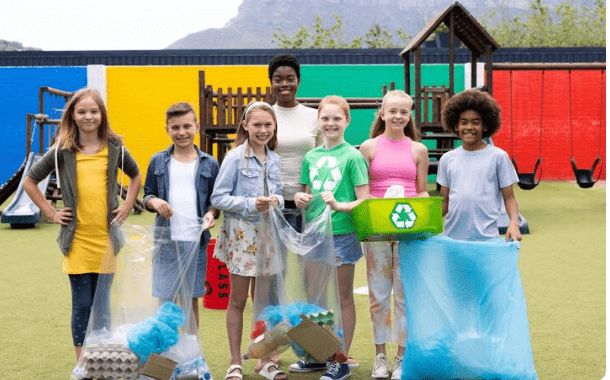
Recycling has subtly changed over the last ten years from a civic obligation to a wonderfully powerful catalyst for urban renewal. Recycling is changing how communities define value, opportunity, and rejuvenation; it is no longer limited to municipal warehouses or suburban curbsides. The most progressive mayors are approaching it as a catalyst for policy, employment, and community cohesion rather than simply a cleanup tactic.
Turning Urban Waste into Engines of Renewal
| Category | Insight |
|---|---|
| Economic Value | Recycling generates skilled and entry-level jobs, boosting local economies |
| Land Use | Frees space from landfills for parks, housing, and public amenities |
| Energy Savings | Using recycled materials consumes significantly less energy |
| Emissions Impact | Lower energy use means fewer carbon emissions and cleaner air |
| Infrastructure Innovation | Drives adoption of smart waste tech and green construction materials |
| Policy Shaping | Strong legislation helps build circular economies |
| Social Behavior | Public engagement reframes waste as a valuable resource |
Recycling is being viewed by many cities as a multifaceted answer in light of the diminishing landfill area and growing development expenditures. One statistic is particularly noteworthy: the energy required to produce aluminum from recycled material is only 5% of that required to extract it from raw bauxite. Such energy reductions are revolutionary, particularly when they are repeated throughout entire metropolitan systems.
Additionally, some municipalities are using advanced analytics to optimize garbage flows, pinpoint the busiest neighborhoods, and customize pickup routes to save gasoline. Garbage trucks now resemble mobile sensors feeding citywide data loops rather than back-end utilities thanks to these AI and IoT-powered solutions.
Urban governments have started working with startups and architecture companies through strategic alliances to construct using what was previously wasted. In Seoul, roadbeds are now stabilized using recycled concrete aggregates. In Malmö, modular facades are made from shredded plastic. To stop erosion during storm season, old tires are placed along flood channels in Accra, Ghana.
What about the jobs? They go beyond simple categorization. They involve creating new applications, running cutting-edge equipment, educating locals about material science, and overseeing logistics. Recycling is proving to be quite adaptable in the types of labor it provides, supporting both white-collar and blue-collar livelihoods, especially in dense cities.
A long-abandoned bottling plant in Baltimore’s Curtis Bay area was transformed into a materials recovery center through a city-led program. In addition to processing recyclables, residents were employed to oversee outreach, conduct workshops at nearby schools, and make public art out of recycled materials. It was especially creative in the way it combined social restoration with environmental objectives. One former shipyard worker grinned as he told me how his children now recycle more than he does, saying he “never imagined trash would pay his mortgage.”
In many places, there has been a noticeable improvement in public conduct, both in terms of awareness and engagement. Bins with QR codes provide access to real-time dashboards that display the location and usage of resources. Before and after pictures of abandoned areas that are now flourishing as a result of recycling-funded urban gardening initiatives are displayed on street posters. The behavior is reframed from routine to momentous by these touches.
Naturally, not all endeavors are smooth. Glass and e-waste infrastructure is lacking in several cities. Others struggle with shifting recyclables markets or unlawful dumping. However, the trend toward circular thinking is still very much alive here. Affordable home in Milan is being insulated by architects using leftover textiles from surrounding companies. PET bottles are collected by vending machine firms in Tokyo for remanufacturing.
The secret is to develop strong policy frameworks that incentivize businesses to plan for reuse and citizens to carefully separate their garbage. Laws requiring extended producer accountability are particularly successful in making producers think about what happens to their goods after they are sold. Financial instruments such as recycled material subsidies and landfill taxes also contribute to positive economic shifts.
These initiatives are vital to the fight against climate change. In order to minimize extraction, lower shipping emissions, and prevent methane from decomposing organic waste, cities working to fulfill emissions objectives are depending more and more on material recovery. It’s a very effective and useful tactic.
The concepts of the circular economy have gained popularity over the last ten years—not as abstract ideas but rather as a set of modest, practical actions with quantifiable benefits. Once concentrating on housing density and traffic flow, city planners are now investigating bioplastic production and attending waste-design hackathons.
This poses a responsibility as well as an opportunity for early-stage innovators. In addition to being accessible, inclusive, and resilient to economic hardship, the technologies that optimize processes and free up human talent must also be strong. Recycling runs the risk of becoming a patchwork rather than a system if it doesn’t.
Clarity, continuity, and curiosity are characteristics that the most successful projects have in common. They communicate with locals in an understandable manner. They endure across all political cycles. Additionally, they pose open-ended issues, such as whether demolished drywall may be used to plant rooftop gardens or how orange peels could be used as insulation.
Having previously written recycling off as a side issue to more pressing urban issues, I’ve been especially impressed by its silent momentum.
It’s not ostentatious. It isn’t suitable for Instagram reels or ribbon cuttings. However, recycling is repeatedly demonstrating itself as a stimulant as well as a cleaning in neighborhood after neighborhood. We can’t save everything we throw away. However, what we decide to change has the ability to change the city itself.
