

Cities are starting to change as a result of AI-powered planning, which reacts to innumerable factors with a speed that is remarkably comparable to a swarm of bees coordinating their moves without hesitation. Urban planners now have an analytical partner that can process large areas in a matter of seconds thanks to these algorithms, which have become incredibly adept in recent years at deciphering patterns that humans have historically spent months building by hand. The software’s capacity to analyze traffic flow, energy grids, and public opinion becomes extremely effective for governments under pressure to act swiftly as cities grow and difficulties worsen.
Planners looking to transition from reactive repairs to anticipatory design are finding that advanced predictive modeling is very helpful. AI uses sophisticated algorithms to transform sensor data, transit logs, and energy patterns into predictions that vividly depict future traffic jams, climatic stress, or population changes. These projections adapt to new information much more quickly than any traditional review process, enabling authorities to plan forward rather than just react. By making this change, planning adopts a perspective that makes uncertainty manageable rather than overpowering.
| Key Topic | AI-Powered Urban Planning |
|---|---|
| Core Concept | Software analyzing and designing cities with advanced intelligence |
| Main Capabilities | Predictive modeling, generative design, automation, simulation |
| Benefits | Speed, precision, efficiency, inclusive public engagement |
| Human Role | Ethical judgment, creativity, political negotiation |
| Adoption Trend | Rapid growth in smart cities and sustainability-focused regions |
| Reference Link | https://www.esri.com/en-us/smart-cities/overview |
Many urban planning offices now have generative design technologies that can simulate thousands of different urban layouts in a matter of minutes. These technologies provide layouts that optimize walkability while reducing structural stress by quickly evaluating sunshine exposure, public transportation reach, retail flow, heat islands, and environmental burdens. When compared to conventional manual writing, the sheer variety of scenarios produced is immensely adaptable. Planners increasingly use these simulations to create neighborhoods that address both functional needs and aesthetic goals through strategic collaborations with developers, promoting developments that strike a balance between resilience and beauty.
Millions of people started working remotely during the epidemic, which put logistical burden on communities that had previously benefited from physical compactness. AI systems handled a lot of work during this time, predicting demand for public transportation, dynamically modifying traffic lights, and tracking pedestrian recovery in real time. After being labor-intensive at first, these duties were automated to streamline operations and free up human talent for strategic decision-making. These systems’ accuracy demonstrated how digital technologies may continue to be incredibly dependable even when human procedures become disjointed or delayed.
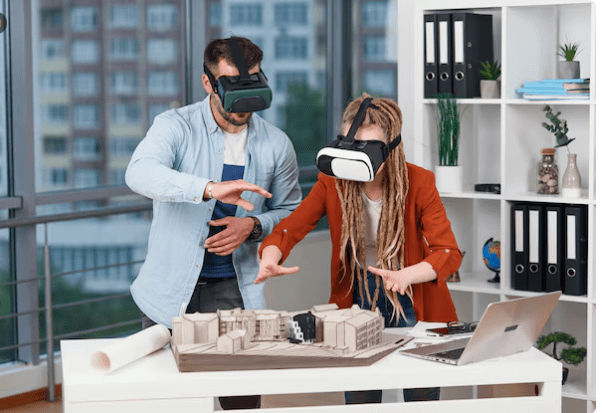
Increasing public participation is one of AI’s most underappreciated advantages. In the past, extensive reports and low meeting participation were the mainstays of city consultations. Thousands of community submissions are now analyzed by AI technologies, which arrange comments according to issue, urgency, and tone. This makes the feedback incredibly apparent for planners who have to balance conflicting interests. Residents can see new developments before a single foundation is built thanks to VR-based participatory tools, which provide citizens with compelling experiences that increase trust and lessen conflict. Participation rates have significantly increased as a result of these immersive interactions, indicating a move away from top-down instructions and toward collaborative planning.
Energy system optimization has shown impressive results for sustainability projects. Smart grids continuously evaluate household demand, allocating excess where it is required while cutting waste. For instance, AI-powered rubbish collection routing has drastically decreased fuel use in a number of cities, showing how little changes can result in enormous environmental benefits. Because automated efficiencies support the idea that technology may assist cities in adapting to change rather than collapsing under it, these advancements feel especially novel for areas under climate pressure.
AI is becoming more widely recognized as well-known urban supporters like Elon Musk and Bjarke Ingels advance ideas of adaptable, digitally connected surroundings. Their initiatives have brought attention to the expanding nexus between automation, design, and civic imagination, inspiring digital companies and local governments to investigate cooperative avenues. Beyond the obvious convenience of digital maps or transit alerts, AI has a profound impact on how cities anticipate expansion, stress, and renewal.
However, human planners always emphasize that these technologies should continue to be supplementary rather than monopolizing. No dataset can fully comprehend the ethical conundrums, political sensitivities, and cultural values that are involved in urban planning. Funding is still the largest obstacle for early-stage firms developing urban analytics, although many investors agree that human oversight is essential. AI is very good at seeing patterns, but it is unable to completely understand the social factors that affect how people define home, the symbolic importance of a heritage area, or the emotional value of a public square.
Governments now prioritize lowering urban emissions in light of global warming, and AI-powered tools give planners the ability to test alternatives at a speed that was previously unthinkable. Long before infrastructure breakdowns happen, vulnerabilities are identified through climatic stress tests, pedestrian simulations, and energy modeling. Because AI-enabled forecasting makes it simpler to integrate solar, wind, and battery storage into urban grids without upsetting existing circuits, the usage of renewable energy has increased dramatically over the last ten years.
Today’s hybrid method, in which humans direct interpretation while AI handles analytical tasks, enables planners to embrace creativity rather than become bogged down in spreadsheets. Several cities have started to secure transparent decision-making processes by incorporating blockchain technology and other cutting-edge frameworks, guaranteeing community trust even as automation grows. The assumption that cities, at their finest, exhibit both mathematical intelligence and narrative depth is supported by this fusion of computer accuracy and human sensitivity.
