

The early days of renewable energy, when a promising concept started pushing sectors toward a more resilient future, are strikingly comparable to the growing excitement with self-healing concrete. Because it combines a biological spark with technical precision, enabling fissures to seal themselves without human intervention, researchers frequently characterize this material as being extraordinarily flexible. In recent years, engineers evaluating the material have observed how remarkably obvious the benefits become as the initial repairs take effect, giving the concrete an almost lifelike ability to adapt to stress.
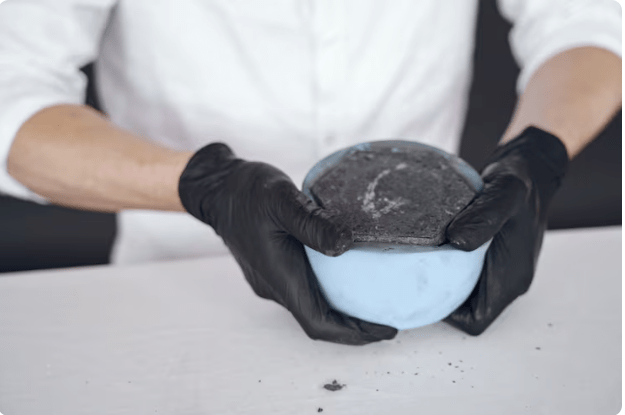
The technology is based on two methods that have significantly advanced in the last ten years. The bacterial approach uses nutrients like calcium lactate and dormant Bacillus bacteria that are encapsulated inside the concrete mix. The bacteria start eating those nutrients and releasing calcium carbonate when water seeps into a fracture, creating a limestone-like seal that fortifies the structure. A particularly novel substitute is provided by the capsule approach, which embeds small containers containing sodium silicate or polymers. The capsules burst as fractures appear, releasing their contents and offering a surprisingly low-cost alternative to using specialized tools to treat minor cracks.
Key Information About Self-Healing Concrete
| Topic | Details |
|---|---|
| What It Is | Concrete that repairs cracks autonomously using bacteria or healing capsules |
| Main Methods | Bacterial limestone formation, polymer or sodium-silicate capsule release |
| Healing Capacity | Cracks up to approx. 0.8 mm currently healable |
| Key Benefits | Longer lifespan, reduced maintenance, sustainability, improved safety |
| Current Trials | Europe and U.S. bridge and roadway experiments |
| Reference |
A number of researchers have recently characterized the material’s behavior as being exceptionally successful at preventing long-term degradation. Self-healing concrete stops water and chlorides from edging toward steel reinforcements, which is usually where corrosion starts, by spontaneously caulking cracks. Because corrosion-related failures have drastically shortened the lifespan of coastal structures, bridges, and tunnels over the last ten years, this self-repairing capability is particularly attractive for major infrastructure networks that are under pressure from climate change.
Governments looking for extremely effective ways to manage aging infrastructure are frequently offered self-healing concrete as a solution. Many localities saw a tightening of maintenance funds during the epidemic, which forced agencies to postpone non-essential repairs. That halt brought to light a vulnerable reality: conventional concrete starts to slowly deteriorate as soon as it cures. Countries might increase operational performance, decrease catastrophic failures, and depend on infrastructure that acts more like a responsive system than a rigid slab of stone by including self-healing technologies.
The case is further strengthened by the environmental argument. Self-healing concrete provides a means of lowering demand for cement, which continues to be a significant source of emissions worldwide. The substance is a very durable substitute that reduces the demand for fresh cement and increases the lifespan of structures by requiring fewer repairs and replacements. Governments concentrating on climate-resilient development have made cutting such emissions a primary priority in the context of global warming.
Test sections of pavement in the United States and early testing on bridges in the Netherlands have proved very helpful in proving practicality. Engineers’ assumptions for normal maintenance were altered when they observed that cracks up to 0.8 millimeters mended on their own in a matter of weeks. As long as nutrients are present, the material will continue to mend repeatedly, simplifying operations and freeing up human expertise for tasks requiring more specialized management, according to engineers engaged in the testing.
Despite its potential, the industry continues to encounter obstacles. Since the production process becomes more difficult when bacteria or capsules are included, cost is still one of the largest obstacles. The difficulty for medium-sized enterprises frequently resides in striking a balance between the higher initial cost and potential long-term benefits that could take years to manifest. Several institutions and private companies have pushed the material toward commercial-scale production through strategic partnerships, although batch uniformity still has to be improved. Manufacturers anticipate economies of scale will make the material much faster to develop and incorporate into building workflows as adoption increases.
Another element of uncertainty is introduced by regulatory frameworks. With strength, durability, and composition regulations based on decades of testing, concrete is still one of the most strictly regulated building materials. The same standards must be met by self-healing variations, and this process proceeds noticeably more slowly than the rate of invention. In order to ensure that contractors can specify self-healing alternatives without encountering bureaucratic obstacles, researchers aim to expedite approval timescales by working with national standards authorities.
Even the leading researchers in the field are curious about long-term performance. While some engineers investigate whether the capsules’ degradation impacts structural performance, others wonder how microorganisms will respond to decades of exposure. These unresolved issues are reminiscent of early worries about fiber-reinforced plastics, which have since gained popularity following years of development and observation.
Despite these obstacles, self-healing concrete is clearly gaining traction. It is seen by investors as a very inventive substance that has the power to revolutionize an entire industry. It is viewed by public bodies as a means of stretching tight budgets. It is viewed by environmental analysts as a technology that has the potential to significantly alter long-term carbon forecasts. Additionally, engineers, who are frequently the most cautious group, characterize it as a unique substance that alters their perspectives on longevity, maintenance, and failure.
Self-healing concrete will probably become more and more in demand as infrastructure requirements increase. As data grows and confidence increases, more urban tunnels, water channels, and highways may use this technology in the years to come. Future cities might rely on materials that are able to detect and react to damage in real time, resulting in constructed environments that are almost self-aware in their ability to maintain their structural integrity.
The most intriguing feature is how easily self-healing concrete can be included into more general discussions on resilience. Building systems that survive longer, adapt more gracefully, and lessen the burden on public resources is a goal that unites environmental planning, architecture, and transportation. Engineers are changing assumptions about what concrete should perform and redefining what long-term durability looks like by including its biological or chemical systems.
Self-healing concrete is becoming more than just a new material as it continues to revolutionize the construction industry by automating processes that were previously done by hand. It turns into a representation of a future in which infrastructure takes care of itself, costs organically drop via design, and sustainability develops via creative thought rather than sacrifice. Although the industry might not accept it completely right once, the change has already begun, with early adopters demonstrating that fissures can actually spur renewal rather than serve as a symptom of deterioration.
